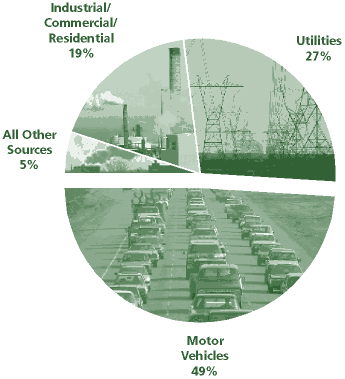
Nitrogen Oxides
www.NitrogenOxides.com

Pollution Free Power Solutions that Reduce or Eliminate NOx


Biomethane - The Cleanest and Greenest Biofuel and 
the only "Carbon Negative Energy" Fuel
 

Providing Biomethane and Synthesis Gas Project 
Development Through our Proprietary Technologies

Now Packaging our own Cogeneration 
& Trigeneration Energy Systems


Anaerobic Digesters * Biogas to Biomethane  *  Biomass Gasification Plants

Biomethane  *  Cogeneration  *  Natural Wastewater Treatment  

Synthesis Gas  *  Trigeneration  *  Wastewater Treatment Systems

Please see our related sites:

www.AnaerobicDigester.com

www.BiogasToBiomethane.com

www.BiomassGasification.com

www.Biomethane.com

www.Cogeneration.net

www.NaturalWastewaterTreatment.com

www.SynthesisGas.com

www.Trigeneration.com


For more information, call/email:

Tel.   (9893827)2705081-104072777  

Email:  info@NitrogenOxides.com


We provide Selective Catalytic Reduction engineering and project development services that utilize the Best Available Control Technology that are able to reduce Nitrogen Oxides emissions to Non-Detect. Unlike most companies, we are equipment supplier/vendor neutral. This means we help our clients select the best equipment for their specific application. This approach provides our customers with superior performance, decreased operating expenses and increased return on investment.  Selective Catalytic Reduction systems are frequently used in removing NOx.

We now package our own cogeneration and trigeneration energy systems that reach about 90% system efficiency - nearly 300% more efficient than typical central power plants. 

Installing one of our cogeneration or trigeneration energy systems can reduce your energy expenses and help reduce/eliminate your electric utility's demand charges and serve as an excellent "demand side management" solution.


Cooler, Cleaner, Greener Power & Energy Solutions project development services are one of our specialties. These projects are Kyoto Protocol compliant and generate clean energy and significantly fewer greenhouse gas emissions. Unlike most companies, we are equipment supplier/vendor neutral. This means we help our clients select the best equipment for their specific application. This approach provides our customers with superior performance, decreased operating expenses and increased return on investment. 

Renewable Energy Technologies provides project development services that generate clean energy and significantly reduce greenhouse gas emissions and carbon dioxide emissions. Included in this are our turnkey "ecogeneration" products and services which includes renewable energy technologies, waste to energy, waste to watts and waste heat recovery solutions.  Other project development technologies include; Anaerobic Digester, Anaerobic Lagoon, Biogas Recovery, BioMethane, Biomass Gasification, and Landfill Gas To Energy, project development services. 

Products and services provided by Renewable Energy Technologies includes the following power and energy project development services: 


When It Comes to Energy Independence,
Biomethane, Not Coal, is America's "Ace in the Hole"
and One of the Greenest of All Biofuels


It's Time to Start Building Our Country's Biomethane Infrastructure &
Producing Biomethane, the Cleanest/Greenest Biofuel!


By:  M.E. Goodell, M.B.A.
Biomethane Technologies
www.Biomethane.com

Biomethane, NOT Coal, is America's True "Ace in the Hole" when it comes to our energy future, economics, the environment, sustainability and America's “Energy Independence.” And biomethane is also receiving recognition as one of the greenest of all biofuels.   

For years now, the coal industry has been touting "coal is America's 'Ace in the Hole'" when they discuss the abundance of our coal reserves here in the U.S. and the role they hope coal will play in America's energy future.

But coal is far from being the “Ace in the Hole” the coal lobby would have everyone believe.  That’s due to the proverbial “black eye” not to mention the “black lungs” and other problems that are inherent with “dirty coal.”  

While there may be a place for coal in America's energy future, coal must become "clean" for America to value it as a possible energy resource. Plans or building 18 new coal fired power plants were cancelled in Texas last year due to the fact that coal isn't clean, and utilities aren't interested in investing the extra costs for building power plants that use "Clean Coal Technology" or "Integrated Gasification Combined Cycle" power plants that also now need to include "Carbon Capture and Sequestration" technologies to remove the carbon dioxide emissions from the stacks. Plans for many other coal fired power plants are being cancelled. And even now, owners of coal fired power plants (pulverized coal) are switching from coal, to biomass, and biomass gasification technologies, as the writing is on the wall.

Unless our society relishes the thoughts of moving back to the caves, and using candles, and foregoing our modern-day comforts, we need to move forward with renewable energy technologies such as biomethane, as the alternative is power shortages and blackouts.

We believe biomethane represents the best and greenest of all biofuels. There are no supply problems with biomethane, and we have a virtually unlimited supply for using biomethane wherever natural gas is presently used as a fuel.

It should be pointed out that biomethane is chemically no different than natural gas from the "fossil fuel" form of natural gas or CH4.

However, one important distinction between biomethane and the fossil-fuel variety of natural gas, is that the production and use of biomethane is “carbon neutral” in that the greenhouse gas emissions from biomethane use do not add any new net greenhouse gas emissions.

Biomethane starts out as “biogas” but must be cleaned and purified before it can be used as a renewable fuel.  The process of cleaning and purifying the biogas is called “biogas to biomethane.”  The impurities that are found in biogas include hydrogen sulfides, siloxanes, and carbon dioxide. When the impurities are removed from biogas, it is then referred to as biomethane and available for use as a clean fuel, just as the fossil-fuel form of natural gas is used. 

Biomethane reserves and supplies, unlike fossil-fuel natural gas, are virtually unlimited. Biomethane is produced from many sources including anaerobic digesters, wastewater treatment systems, landfills and landfill gas to energy projects and most agricultural and forestry operations. Last year, the first Biomethane NGV refueling station was opened in Eugendorf, Austria.  Like a gas station provides gasoline for cars, the the NGV Biomethane station in Eugendorf provides biomethane for NGVs (Natural Gas Vehicles).  Presently, the station provides a blend of biomethane and natural gas.  Eventually, they hope to provide 100% biomethane for natural gas vehicles.  Companies and researchers in Germany and Austria have determined that “Cellulosic Biomethane” is the greenest of all biofuels, and the least expensive biofuel to produce.  Germany and Austria are now planting vast amounts of a form of Kentucky Bluegrass which will be harvested for use in producing “Cellulosic Biomethane,” through anaerobic digesters and fermentation.

Researchers from around the world, starting in Austria, are finding that grasses such as Kentucky Bluegrass are easily converted into biomethane as well as organic fertilizer. Cellulosic Biomethane production doesn’t require the fermentation of sugars or starches - as the first generation of liquid biofuels – requiring grains and oilseeds from food crops. As the Austrian Cellulosic Biomethane project shows, biomethane can be produced from a cellulosic biomass feedstock like grass. Yield estimates from the Austrian Cellulosic Biomethane research indicate that one natural gas vehicle can travel 10,000 to 15,000 miles on just one acre of Kentucky Bluegrass that was processed into biomethane.

At a Jan. 8, 2009 public workshop held by the California Natural Gas Vehicle Coalition, they documented the superior benefits and potential of biomethane as a clean, renewable energy resource.  The California Natural Gas Vehicle Coalition stated that biomethane should be classified as a "Super Ultra Low Carbon fuel."  Super Ultra Low Carbon fuel is defined as providing at least an 82 percent reduction in greenhouse gas emissions - based on the California Air Resource Board’s analysis of biomethane from landfill gas.

Biomethane has a carbon dioxide emissions intensity of only 11 as compared with:

                                                                        67.9 for natural gas
                                                                        95.8 for diesel
                                                                        96.7 for gasoline

Biomethane can displace and substitute the equivalent of 29% percent of all petroleum diesel transportation fuel used - almost immediately.

According to the California Energy Commission and the Biomass Collaborative, landfills, wastewater treatment, and dairy waste sources - which are "developable today" and can start producing biomethane almost immediately, with low investment/high returns, could yield 121 billion cubic feet of biomethane. At $8.00/mmbtu, that's a $1 billion market opportunity in California alone.  The 121 billion cubic feet of Biomethane equals about 860 million gallons of petroleum diesel. California alone uses about 3 billion gallons of diesel annually for transportation. Emerging biomass gasification and Biomethanation technologies could more than double biomethane supplies.

Biomethane - like natural gas from "fossil fuels" - can be transported in the form of either compressed natural gas or liquefied natural gas. And using "Compressed Biomethane" is a significantly better choice as a transportation fuel than traditional "natural gas."

Biomethane is the "renewable natural gas" and is far better for the environment and the economy than natural gas. Biomethane, when "vented" to the environment, is 21 times more hazardous to the climate than carbon dioxide emissions which are the only emissions (and water vaport) from compressed natural gas vehicles' engines when used as a fuel.

Again, we are reminded that biomethane is the same chemical compound as natural gas: CH4, and completely replaces and substitutes for natural gas. Engines, turbines, boilers and every other natural gas appliance can use biomethane without any adjustments or modifications - just like natural gas.

Biomethane supplies, as opposed to natural gas supplies from the fossil fuel industry, are available in an unlimited supply.

Moving forward with a “Biomethane Infrastructure” is the direction our country needs to be moving as one of our fuel choices as we become energy-independent.  Every MCF of biomethane that we use displaces about 8 gallons of gasoline and creates jobs that will never be outsourced or downsized.

(Some of the above information from the California Natural Gas Vehicle Coalition.)


For more information on Biomethane, Biomethane production technologies and clean power generation, see our related sites:

www.AnaerobicDigester.com                        www.BiogasPlant.com

www.BiogasToBiomethane.com                    www.Biomethane.com

          www.CleanPowerGeneration.com                www.CompressedNaturalGas.net

          www.GreenhouseGasEmissions.com             www.LandfillGasToEnergy.com      

          www.LiquefiedNaturalGas.net                      www.Trigeneration.com

          www.WastewaterTreatmentSystems.com     www.WasteToFuel.com


Please Support H.R. 1158, The Biogas Production Incentive Act of 2009 
to Help Create our Nation's Biomethane Infrastructure 
& Biomethane Reserves

SUMMARY:  The Biogas Production Incentive Act of 2009 if enacted, will amend the Internal Revenue Code to allow a business-related tax credit for the production, sale, or use of biogas. Defines biogas as a gas that is derived by processing qualified energy feedstock (i.e., manure of agricultural livestock and other organic agricultural or food industry byproduct waste material) in an anaerobic digester and that contains at least 52% methane and carbon dioxide and trace gases. Provides an increased credit for biogas produced from qualified cellulosic energy feedstock.


Dear Senator or Representative ________

I am writing to you in support of HR 1158, the Biogas Production Incentive Act of 2009 and recommend that Congress develops and passes this much needed legislation that provides a $4.27 per MMBTU tax credit for the production of Biogas – also known as "Renewable Natural Gas," "Renewable Biogas" or "Biomethane."

            H.R. 1158, the Biogas Production Incentive Act would establish this tax credit that will help jumpstart this vital industry.  Renewable biogas and biomethane have been heralded by many as being the greenest of all biofuels.  Biomethane has a carbon dioxide emissions intensity of only 11 as compared with 67.9 for natural gas, 95.8 for diesel and 96.7 for gasoline.  Biomethane can displace and substitute the equivalent of 29% percent of all petroleum diesel transportation fuel used - almost immediately.  The California Natural Gas Vehicle Coalition stated that Biomethane should be classified as a "Super Ultra Low Carbon fuel."  Super Ultra Low Carbon fuel is defined as providing at least an 82 percent reduction in greenhouse gas emissions - based on the California Air Resource Board’s analysis of biomethane from landfill gas.

The U.S. Congress has wisely supported the expanded use of domestic renewable resources through a variety of tax incentives and other programs.  Up to this point, Congress has focused primarily on measures that support the production of renewable liquid transportation fuels or electricity.  In the U.S., however, natural gas represents 23 percent of the energy consumed.

            Natural gas is the fuel of choice to provide residential and commercial heat for space and hot water in most applications and is used to produce steam in a variety of commercial and industrial applications. Natural gas is also the fuel that provides the energy to manufacture many industrial products including aluminum, steel, glass, chemicals, fertilizer, and ethanol.  

            Incentivizing the production of renewable natural gas or "Biomethane" from sources that include animal manure, landfills, renewable biomass and agricultural wastes will support expanding the role of renewables into this existing energy sector, where little opportunity exists today.   It will also create another business investment prospect for renewable project developers and the potential to expand rural economies while supporting existing industrial jobs and dramatically reducing carbon emissions.     

Please consider the following:

           Renewable Biomethane is a versatile form of bio-energy. It can be used directly at the site of production, or placed in the pipeline to support a variety of residential commercial or industrial applications.

           Renewable Biomethane produced from renewable sources including animal manure, landfills, renewable biomass and agricultural wastes can be produced at high efficiencies ranging from 60–70 percent.  Additionally, all of the technology components to produce renewable gas from this variety of sources exist today.

           Renewable Biomethane can be delivered to customers via the existing U.S. pipeline infrastructure.

           Renewable Biomethane can provide a renewable option for many heavy industries, which could save existing industrial jobs in a carbon constrained economy - while creating new rural green jobs to produce Renewable Biomethane.

           Renewable Biomethane production in digesters provides the agricultural sector additional environmental benefits by improving waste management and nutrient control. 


We believe this is a fiscally responsible proposal that will provide the following benefits:              

           Jump-start new biomethane gas production

           Begin the creation of the biomethane infrastructure and biomethane industry

           Increase biomethane “reserves”

           Creation of green jobs

           Expand the rural economy and increase revenues for farming and agricultural operations

           Increase energy independence

           Reduce greenhouse gas emissions.

Thank you for your support and consideration of this legislation.

Sincerely,


_______________________
Signature and address

Please write to your Representative and Senators, and ask them to support H.R. 1158 and the $4.27 per MMBTU tax credit for the production of Biomethane/Renewable Natural Gas, using the above letter as a suggested letter you are welcome to use as your own.

Thank you!  

For more information on Biomethane, see www.Biomethane.com


Inquiries may be directed to:

Tel.   (9893821)2715283-104072777  

Email:  info@NitrogenOxides.com


We are the ONLY Company that Builds Integrated Cogeneration & Trigeneration Energy Plants on a Single Skid with Effective System Efficiencies that Exceed 90%

LEASING OPTIONS NOW AVAILABLE
ON OUR NEW COGENERATION AND TRIGENERATION POWER PLANTS!


Our Exclusive (Optional) SCR System Reduces Nitrogen Oxides To "Non-Detect" and
Without Ammonia or Urea


Our small footprint Cogeneration and Trigeneration Plants measurements are 
15' wide by 15' in height by and 55' in length


Let Us Design, Build, and Install Your Next Cogeneration or Trigeneration Power Plant!


Trigeneration Technologies, LLC. is a privately held company that was founded by two of the board members of the Renewable Energy Institute. 

Our specialty is trigeneration. We  manufacture, sell and install trigeneration power plants that approach 100% net system efficiency. This means our trigeneration power plants provide nearly 100% of the power and energy from the fuel our trigeneration plants use, in the form of cooling (air conditioning) heating (hot water and/or steam) and electricity that our customers use "onsite" in their buildings, facilities and plants.  

What is "Trigeneration"?

Trigeneration is the simultaneous production of three forms of energy - typically, Cooling, Heating and Power - from only one fuel input. Put another way, our trigeneration power plants produce three different types of energy for the price of one.  

Our company's trigeneration power plants reach overall system efficiencies of 86% to 93%.  Typical "central" power plants, that do not need the heat generated from the combustion and power generation process, are only about 33% efficient.  


Trigeneration Diagram & Description
Trigeneration Power Plants' Have the Highest System Efficiencies and are 
About 300 % More Efficient than Typical Central Power Plants

Trigeneration plants are installed at locations that can benefit from all three forms of energy.  These types of installations that install trigeneration power plants are called "onsite power generation" also referred to as "decentralized energy."   

One of our company's principal's first experience with the design and development of a trigeneration power plant was the trigeneration power plant installation at Rice University in 1987 where our trigeneration development team started out by conducting a "cogeneration" feasibility study.  We installed a 4.0 MW Ruston gas turbine for the power plant.  Rice University selected an EPC company that installed the trigeneration power plant, along with waste heat recovery boilers and absorption chillers. A "waste heat recovery boiler" captures the heat from the exhaust of the gas turbine.  From there, the recovered energy was converted to chilled water - originally from (3) Hitachi Absorption Chillers - 2 were rated at 1,000 tons each, and the third Hitachi Absorption Chiller was rated at 1,500 tons. The Hitachi absorption chillers were replaced shortly after their installation by the EPC company.  The first trigeneration plant at Rice University was so successful, they added a second 5.0 MW trigeneration plant so today, Rice University is now generating about 9.0 MW of electricity, and also producing the cooling and heating the university needs from the trigeneration plant and circulating the trigeneration energy around its campus.


Trigeneration Chart
Trigeneration's "Super-Efficiency" compared 
with other competing technologies
As you can see, there is No Competition for Trigeneration!


Our Trigeneration power plants are the ideal onsite power and energy solution for customers that include:  Data Centers, Hospitals, Universities, Airports, Central Plants, Colleges & Universities, Dairies, Server Farms, District Heating & Cooling Plants, Food Processing Plants, Golf/Country Clubs, Government Buildings, Grocery Stores, Hotels, Manufacturing Plants, Nursing Homes, Office Buildings / Campuses, Radio Stations, Refrigerated Warehouses, Resorts, Restaurants, Schools, Server Farms, Shopping Centers, Supermarkets, Television Stations, Theatres and Military Bases.

We partner and collaborate with other forward thinking companies and communities that are interested in changing the outdated power and energy model of the past - inefficient and highly-polluting central power plants that average 33% efficiency - to a new paradigm and model for the future -  community-based cogeneration and trigeneration power plants at more than 90% efficiency - and therefore provides power and energy at lower prices while significantly reducing and even eliminating typical power plant emissions and greenhouse gas emissions.  

Call (832) 758 - 0027 for more information about community-based cogeneration and trigeneration power plants, or about making your community, hospital, university or other commercial facility a model for the future.

We presently contract the packaging of our new trigeneration power plants by a 3rd party/supplier but plan to build a new trigeneration manufacturing plant - near Houston, Texas where we will be able to significantly increase our trigeneration power plant production.

At about 86% to 93% net system efficiency, our trigeneration power plants are about 300% more efficient at providing energy than your current electric utility. That's because the typical electric utility's power plants are only about 33% efficient - they waste 2/3 of the fuel in generating electricity in the enormous amount of waste heat energy that they exhaust through their smokestacks.

Trigeneration is defined as the simultaneous production of three energies: cooling, heating and power.  Our trigeneration power plants use the same amount of fuel in producing three energies that would normally only produce just one type of energy. This means our customers that have our trigeneration power plants have significantly lower energy expenses, and a lower carbon footprint.

Our smallest trigeneration power plant "basic" power plant is a 200 kW trigeneration system. 

All of our trigeneration power plants can produce 20 degree - 42 degree F. chilled water, as well as steam and hot water while generating at least 200 kW of power. We can build trigeneration power plants up to 10 MW and with system efficiencies approaching 100%.

Read more about our Trigeneration Power Plants on our Specifications page.

Not sure what size trigeneration power plant to order or whether trigeneration is right for your business?

We can help!

Not sure what size trigeneration power plant to order or whether trigeneration is right for your business?

We can help as we offer three types of Trigeneration Feasibility Reviews & Studies!

Our Trigeneration Feasibility will help you make a decision whether one of our trigeneration power plants are right for your facility.


Trigeneration Feasibility Study and Analysis

Provides a solid basis for moving a potential renewable energy project forward.  The cost for this depends on the type, location, amount of time we require, and any additional requirements that may be included by the client. 

Generally, a trigeneration feasibility study a good option for clients considering trigeneration that need a trigeneration energy system that is over 500 kW.

The time required to complete the study is about 90 to 120 days, on average. 

The final study we deliver is usually the basis for the customer to obtain a loan, power purchase agreement, energy services agreement or placing an order with us.

To start a Trigeneration Preliminary Study and Analysis, we require a 50% cash payment of the study cost plus a refundable deposit for our reimbursable expenses.


Trigeneration Detailed Concept, Engineering and Design Analysis

The detailed engineering design is a good option for clients that would need a trigeneration energy system with an estimated trigeneration energy system over 3.0 MW and above. In a detailed engineering design, the trigeneration energy system is conceived, designed and engineered as a custom fit and optimized energy solution for your specific facility. 

Final result is usually ready for a company to start construction. A detailed engineering design can take from 4 months to 6 months to complete. The fee will generally run as a percentage of the total installed cost of the trigeneration energy system, and generally costs anywhere from 5% to 15% of the overall cost of the project.

To start a detailed trigeneration engineering design, we require a 50% cash payment of the total fee plus a refundable deposit for our reimbursable expenses.

Our trigeneration feasibility studies and engineering design are led by our licensed engineers.  Our goal is to help you determine whether your renewable energy is viable, identify the merits of your proposed renewable energy project, identify weak points, provide our recommended course of action, as well as our recommendations for products and equipment that need further review or consideration.  Our Feasibility Studies are an excellent "foundation" for building your next renewable energy project.

If you order your new trigeneration power plant from us within 30 days of the date of delivery of our Trigeneration Feasibility Review or Study, we will reduce the cost of your new trigeneration power plant by half the cost of the study and apply the fee to the purchase.

Trigeneration is a technology whose time as come! Particularly for commercial clients who want to decrease their energy expenses and carbon footprint, while increasing energy efficiency and profits. This is possible as our trigeneration power plants surpass 90% net system efficiency. 

This is possible through our trigeneration power plants that surpass 90% system efficiency for our clients that need cooling, heating and power - which covers about 99% of all commercial buildings and companies.

While most new trigeneration power plants are capable of being fueled with clean natural gas, we are dedicated to ending the use of fossil fuels by providing renewable energy and renewable fuels such as B100 Biodiesel or Biomethane.  Simultaneously, we are focused on reducing and eliminating greenhouse gas emissions and carbon dioxide emissions.

In association with the Renewable Energy Institute, affiliate companies and investors, we provide "turnkey" trigeneration power plant development services that range from initial Engineering Feasibility & Economic Analysis Studies through project installation, start-up and commissioning, Operations & Maintenance, and Long Term Service Agreements for the lifetime of our systems.

Trigeneration Technologies' trigeneration energy systems' net system's efficiencies surpass any potential competitor.  We guarantee our standard trigeneration power plants will exceed 90% net system efficiency. 

Our trigeneration plants can use renewable fuels such as Biomethane, B100 Biodiesel or Dimethyl Ether, instead of fossil fuels to run them. We also offer an optional selective catalytic reduction technology that takes NOx down to "non-detect" without the use of ammonia or urea on our new trigeneration plants.

Our range of services (some provided by affiliate companies or manufacturing suppliers) include:

Our renewable energy projects generate Renewable Energy Credit or Certified Emission Reduction credits, which provide an additional income stream from our projects.


"The Trigeneration Experts"
- the ONLY Company that Builds Integrated Trigeneration Plants on a Single Skid with Effective System Efficiencies that Exceed 90%.  Our Optional SCR System Reduces Nitrogen Oxides To "Non-Detect" Without Ammonia or Urea

Our small footprint Trigeneration Plants measurements are: 15' wide by 15' in height by and 55' in length

We Can Design, Build, and Install Your New Trigeneration Power Plant and have it online in less than 130 - 150 days!


Our "Turnkey" Integrated Trigeneration Energy Systems are Available from 60 kW to over 10 MW with system efficiencies > 90% While Providing Practically-free Heating (and Cooling with Trigeneration) and generating power for commercial and industrial customers for as low as 4 cents/kW!  We are the only company that builds, fabricates, packages (on a single skid) and "integrates" Trigeneration power plants.

Standard Trigeneration Power Plants sizes in kW:

                          200 kW                    450 kW                   750 kW          
                          250 kW                    500 kW                   800 kW
                          300 kW                    600 kW                   850 kW
                          400 kW                    700 kW                   900 kW

Standard Cogeneration and Trigeneration Power Plants sizes in MW:

           1 MW          2 MW          3 MW          4 MW          5 MW

Read more about our Trigeneration Power Plants on our Specifications page.


NOTE:  We will NOT use the following equipment manufacturers: 

Capstone microturbines
Daewoo engines
GE Power or Jennbacher
Kawasaki turbines 
Guascor engines 

in ANY of our cogeneration or 
trigeneration power plants.

Our territory includes the U.S.A., Canada, the Caribbean 
and Central America.  


We can package any combination of standard size plants to come up with your optimum size system. Our standard and customized Trigeneration power plants use the leading brands of reciprocating engines or turbines and include our proprietary Waste Heat Recovery technologies that help us achieve system efficiencies greater than 90% and effective heat rates as low as 4050 btu's/kW.  We provide both standard and customized Trigeneration plants that meet our customer's most stringent economic and environmental requirements.

Our Trigeneration Power Plants can run on renewable fuels for even greater environmental and economic savings! These fuels or energy sources include: Biomethane, B100 Biodiesel, Dimethyl-Ether, Synthesis Gas and natural gas. Net system efficiencies of our Trigeneration power plants are now exceeding 90% with up to 95% lower emissions when using Biomethane, B100 Biodiesel, Dimethyl-Ether or Synthesis Gas as the fuel for Trigeneration power plants.

For pricing and delivery information on our Cogeneration or Trigeneration power plants, call (832) 758 - 0027 or send an email with your project's requirements to:  info@trigeneration.com

Read more about our Trigeneration Power Plants on our Specifications page.

Our New "Integrated" Trigeneration Plants Have 
Very High Efficiencies & Low Fuel Costs

The Effective Heat Rate is Approximately 
4050 btu/kW & System Efficiency is 92%

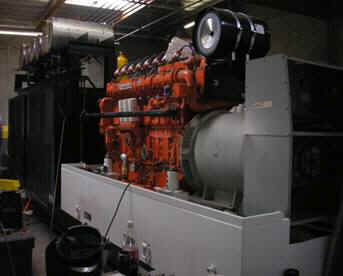
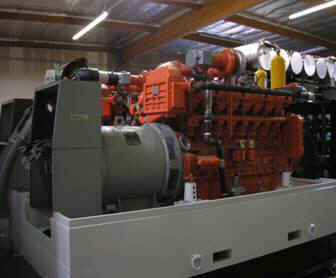
Pictures of our latest Cogeneration Plant Presently Being Built for New Customer.  This Cogeneration Plant is Rated at 900 kW and Features (2) Natural Gas Engines @ 450 kW each on one Skid.


Our onsite trigeneration power and energy system can be an ideal solution for customers wanting increased power reliability and decreased energy and environmental costs.  A few of the types of buildings and businesses that would benefit from an onsite trigeneration plant include the following:

Airports

Casinos

Central Plants

Colleges & Universities

Dairies

Data Centers & Server Farms 

District Heating & Cooling plants

Food Processing Plants

Golf/Country Clubs

Government Buildings and Facilities 

Grocery Stores

Hospitals 

Hotels

Manufacturing Plants

Military Bases

Nursing Homes 

Office Buildings / Campuses

Radio Stations

Refrigerated Warehouses 

Resorts 

Restaurants 

Schools

Server Farms

Shopping centers 

Supermarkets 

Television Stations

Theatres

For pricing and delivery information on our Cogeneration or Trigeneration power plants, call (832) 758 - 0027 or send an email with your goals, objectives and requirements to:  info@trigeneration.com


We would be interested in meeting with potential joint venture partners who are as committed and passionate as we are about making a difference in the world by assisting us with the capital we need to begin mass-producing our +/- 90% efficient trigeneration power plants which will soon be located on the roof (or next to the building) of every commercial business - such as restaurants, office buildings, supermarkets/grocery stores, hospitals, casinos, universities, dairies, data centers and server farms.

Equity positions now available for qualified joint venture partners in multiple trigeneration projects we are seeking to develop with leading Fortune 1000 companies.  Our joint venture equity partners will assist us with manufacturing our Cogeneration or Trigeneration plants and start installing them on the roof-tops or next to our customer's facilities - pending orders from hospitals and restaurants who have agreed to purchase all of our energy generated from our trigeneration plants through our Energy Services Agreement (similar to a Power Purchase Agreement except in the case of an Energy Services Agreement, we also sell the hot water/steam and chilled water, in addition to the electricity our trigeneration plants generate).

Our trigeneration plants will;

* forever change the way that energy is generated and used.

* will be fueled with "green fuels" such as; Biomethane, B100 Biodiesel, Synthesis Gas (generated from biomass feedstock and "converted" through Biomass Gasification plants), Dimethyl Ether or Solar Energy.

* eliminate or greatly reduce our customer's electric demand charges.

* significantly increase the amount of renewable energy used in the U.S. and around the world when renewable fuels such as Biomethane, B100 Biodiesel, Synthesis Gas or Dimethyl Ether

* stop/reverse climate change by reducing greenhouse gas emissions and carbon dioxide emissions.

* reduce and eventually eliminate the use of "fossil fuels."

* reduce the need for inefficient and expensive central power plants owned by utility companies. 

* promote energy independence.

* end America's dependence on oil from OPEC and other countries in the Middle-East, Venezuela and end our need for importing natural gas from Russia.

Prospective joint venture partners are invited to send an introductory email regarding your interests in renewable energy along with your financial abilities and expectations to:  info@Trigeneration.com

____________________________________________________________________________________


Recommended Links


Compressed Natural Gas
www.CompressedNaturalGas.net


Enhanced Oil Recovery

www.EnhancedOilRecovery.com


Gas Compressors
www.GasCompressors.net


Gas Compression
www.GasCompression.net


Gas Processing
www.GasProcessing.net


Gas Sweetening
www.GasSweetening.com


Glycol Dehydration
www.GlycolDehydration.com


H2S Removal
www.H2SRemoval.com


Heater Treater
www.HeaterTreater.com


Liquefied Natural Gas
www.LiquefiedNaturalGas.net


Stranded Gas
www.StrandedGas.com


Carbon Emissions Consulting
www.CarbonEmissions.com


Greenhouse Gas Emissions
www.GreenhouseGasEmissions.com


Renewable Energy Technologies
www.RenewableEnergyTechnologies.com


Biomethane: the Renewable Natural Gas!
For more information, visit:
www.Biomethane.com


Anaerobic Digesters Produce Biomethane, 
the Renewable Natural Gas!
For more information, visit:
www.AnaerobicDigester.com


Biomass Gasification plants Produce: Synthesis Gas, 
also a renewable, green fuel
For more information, visit:

www.BiomassGasification.com
    
or
www.SynthesisGas.com


Renewable Natural Gas - the "perfect" green fuel 
of the future - now available!
For more information, visit:
www.RenewableNaturalGas.com


Sewage Sludge
For more information, visit:
www.SewageSludge.com


Urban Wood Waste
For more information, visit:
www.UrbanWoodWaste.com


Inquiries, please call/email:

Tel.   (9893821)2715283-104072777

Email:  info@NitrogenOxides.com


Compressed Natural Gas

Photo of a natural gas fuel pump.
Compressed natural gas is widely available throughout the U.S. from domestically produced natural gas wells and natural gas pipelines and local distribution companies. Natural gas is available to end-users through the utility infrastructure. It is also clean burning and produces significantly fewer harmful emissions than reformulated gasoline or diesel when used in natural gas vehicles.  In addition, commercially available medium- and heavy-duty natural gas engines have demonstrated over 90% reductions of carbon monoxide (CO) and particulate matter and more than 50% reduction in nitrogen oxides (NOx) relative to commercial diesel engines. Natural gas can either be stored onboard a vehicle as compressed natural gas (CNG) at 3,000 or 3,600 psi or as liquefied natural gas (LNG) at typically 20-150 psi. Natural gas can also be blended with hydrogen. 

Compressed Natural Gas
and 
Compressed Natural Gas Vehicles

What Types of Vehicles Run on Compressed Natural Gas?

According to the Natural Gas Vehicle Coalition (NGVC), as of 2005 there are 130,000 light- and heavy-duty compressed natural gas (CNG) and liquefied natural gas (LNG) vehicles in the United States and 5 million worldwide.

Dedicated natural gas vehicles (NGVs) are designed to run only on natural gas; bi-fuel NGVs have two separate fueling systems that enable the vehicle to use either natural gas or a conventional fuel (gasoline or diesel). In general, dedicated NGVs demonstrate better performance and have lower emissions than bi-fuel vehicles because their engines are optimized to run on natural gas. In addition, the vehicle does not have to carry two types of fuel, thereby increasing cargo capacity and reducing weight.

There are a few light-duty NGVs still available, but if you want a specific type of vehicle, you may want to consider retrofitting a vehicle to an NGV by using an aftermarket conversion system. Heavy-duty NGVs are also available as trucks, buses, and shuttles. Approximately one of every five new transit buses in the United States is powered by natural gas. 

As a new twist, tests are being conducted using natural gas vehicles that are fueled with a blend of compressed natural gas and hydrogen. 

Vehicle Availability

This model year, auto manufacturers are producing fewer models than in years past. In order to get more vehicle options, you may choose to retrofit your own vehicle. 

Fuel Availability

CNG fueling stations are located in most major cities and in many rural areas. Public LNG stations are limited and used mostly by fleets and heavy-duty trucks. LNG is available through suppliers of cryogenic liquids. 

Vehicle Safety

Natural gas vehicles are just as safe as today's conventional gasoline and diesel vehicles. They use pressurized tanks, which have been designed to withstand severe impact, high external temperatures, and environmental exposure.

Adequate training is required to operate and maintain natural gas vehicles because they are different than gasoline or diesel vehicles. Training and certification of service technicians is required. 

Vehicle Costs

In general, a natural gas vehicle can be less expensive to operate than a comparable conventionally fueled vehicle depending on natural gas prices. Natural gas can cost less than gasoline and diesel (per energy equivalent gallon); however, local utility rates can vary.

Purchase prices for natural gas vehicles are somewhat higher than for similar conventional vehicles. The auto manufacturers' typical price premium for a light-duty CNG vehicle can be $1,500 to $6,000, and for heavy-duty trucks and buses it is in the range of $30,000 to $50,000. Federal and other incentives can help defray some of the increase in vehicle acquisition costs. In addition, fleets may need to purchase service and diagnostic equipment if access to commercial CNG/LNG vehicle maintenance facilities is not available. 

Retrofitting a conventional vehicle so it can run on CNG may cost $2,000 to $4,000 per vehicle.

Maintenance Considerations

High-pressure tanks that hold CNG require periodic inspection and certification by a licensed inspector. 

Fleets doing on-site maintenance may need to upgrade their facilities to accomodate NGVs. Costs for upgrading maintenance facilities will depend on the number of modifications required.

Some natural gas vehicle manufacturers now recommend oil changes at intervals twice as long as similar gasoline or diesel models (10,000-12,000 miles). Refer to the vehicle owner's manual or consult the manufacturer to determine proper maintenance intervals.

Benefits

  • Compared with vehicles fueled by conventional diesel and gasoline, NGVs can produce significantly lower amounts of harmful emissions such as nitrogen oxides, particulate matter, and toxic and carcinogenic pollutants. NGVs can also reduce emissions of carbon dioxide, the primary greenhouse gas. For details, see the following publications from the U.S. Environmental Protection Agency:

  • The cost of a gasoline-gallon equivalent of CNG can be favorable compared to that of gasoline, but varies depending on local natural gas prices. 

  • Natural gas is mostly domestically produced. In 2004, net imports of natural gas was approximately 15% of the total used, with almost all the imports coming from Canada.

  • Some natural gas vehicle owners report service lives 2 to 3 years longer than gasoline or diesel vehicles and extended time between required maintenance.

Performance

  • Vehicle range for CNG and LNG vehicles generally is less than that of comparable gasoline- and diesel-fueled vehicles because of the lower energy content of natural gas. Extra storage tanks can increase range, but the additional weight may displace some payload capacity.

  • NGV horsepower, acceleration, and cruise speed are comparable with those of an equivalent conventionally fueled vehicle.

  • Depending on the number of cylinders and their locations, some payload capacity may be compromised with NGVs.

  • Bi-fuel NGVs offer a driving range similar to that of gasoline vehicles.

Recommended Links:


Biomethane: the the "perfect" green fuel & Renewable Natural Gas!
For more information, visit:
www.Biomethane.com


Anaerobic Digesters Produce Biomethane, 
the Renewable Natural Gas!

For more information, visit:
www.AnaerobicDigester.com


Renewable Natural Gas - the "perfect" green fuel 
of the future - now available!
For more information, visit:
www.RenewableNaturalGas.com

Biomass Gasification plants Produce: Synthesis Gas, 
also a renewable, green fuel
F